
Free shipping world wide for all orders over Shop Now
Understand the real differences between earth-mined and laboratory-grown diamonds — so you can choose with confidence.
Natural and lab-grown diamonds may look similar, but natural diamonds are rare and precious, whereas lab-grown diamonds are created artificially using technology and equipment. Both possess the same brilliance and beauty — the right choice simply depends on your values, budget, and vision.

The difference between natural and lab-grown diamonds is quite significant, despite their similar look and appearance. Natural and lab-grown diamonds may look similar, but natural diamonds are rare and precious, whereas lab-grown diamonds are created artificially using technology and equipment.
Both natural and lab-grown diamonds, when used in making jewellery, may look similar and may possess similar brilliance and beauty, but natural diamonds are considered precious and valuable, whereas lab-grown diamonds are more affordable and may be purchased for those who want to purchase a larger diamond at a lower price.
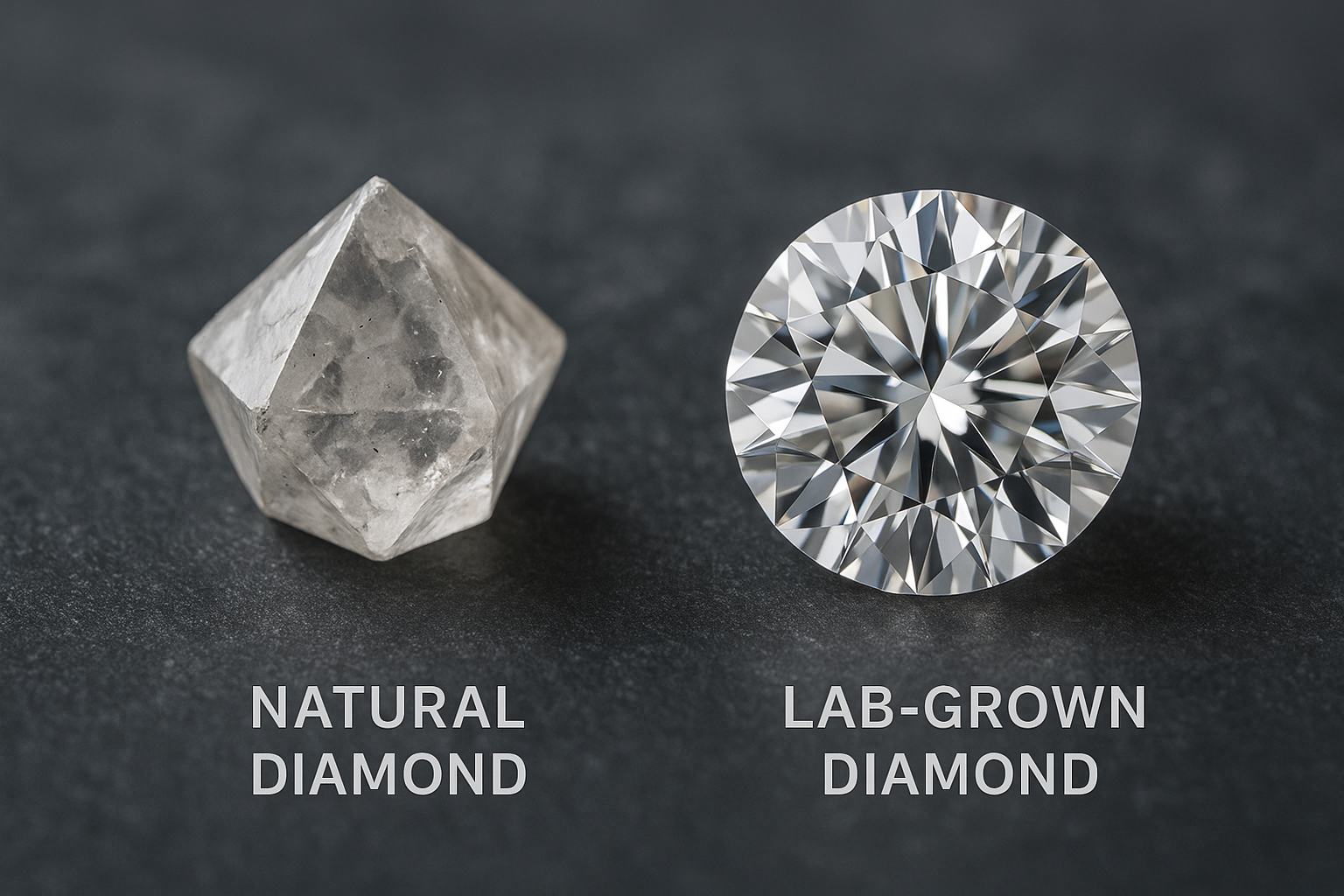
Lab grown diamonds are identical to those found in nature. They have the exact same chemical makeup, and specialist laboratory equipment is needed to tell lab diamonds from natural diamonds.
When looking to discern earth-mined from lab grown diamonds, specialists look for nitrogen within the stone. Lab diamonds contain no nitrogen, whereas natural diamonds pick up tiny amounts of trace elements as they form.
For everyday wear and to the naked eye, the two are completely indistinguishable. Both will dazzle equally — that is the true beauty of both choices.
| Feature | Natural Diamond | Lab Grown Diamond |
|---|---|---|
| Origin | Formed deep in the Earth over billions of years | Grown in a laboratory in 6–8 weeks (HPHT or CVD) |
| Chemical Makeup | 100% pure crystalline carbon | 100% pure crystalline carbon — identical |
| Hardness | 10 / 10 Mohs scale | 10 / 10 Mohs scale |
| Certification | ✦ GIA / IGI certified | ✦ IGI / GIA certified |
| Rarity | Extremely rare — finite supply | Reproducible — not considered rare |
| Price | Premium — strong long-term value | 40–60% lower cost |
| Environment | Mining-dependent; ethical sourcing available | Lower land impact; energy use varies |
| Nitrogen | Trace nitrogen found naturally | No nitrogen — key lab origin marker |
| Resale Value | Strong established secondary market | Lower secondary market value |
| Visible Difference | None to the naked eye — specialist equipment required | |
 Solitaire
 Bridal Set
 Three Stone
 Halo
Halo Vintage
 Side-Stone
 Semi-Mount
 Oval
Oval Emerald
 Marquise
 Pear
Pear Round
Round Princess
 Cushion
 Elongated Cushion